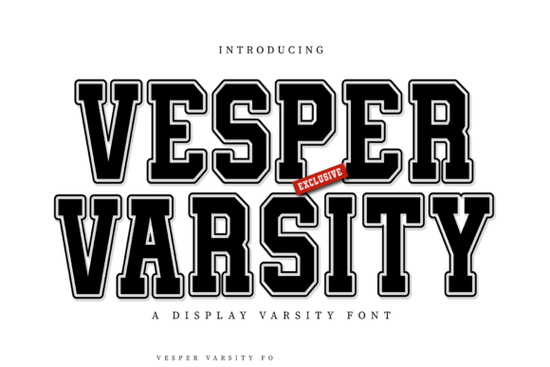
If you need a typeface that captures the energy of Friday night lights and campus pride, the Vesper Varsity Font delivers exactly that. It is a sturdy, retro collegiate typeface built for designs that need to stand out on apparel, signage, and team merchandise. Whether you run a small print shop, sell custom sportswear online, or just enjoy weekend crafting projects, this font gives you the classic athletic lettering style without the extra design work. You get bold block shapes, clean corners, and a built-in outline that makes text pop on both light and dark backgrounds.
What makes a varsity typeface work well on everyday products?
Athletic lettering has always been about readability and impact. When you place text on a curved shoulder or a moving vehicle, thin strokes get lost quickly. This design solves that problem by using thick, uniform weights and sharp geometric cuts. The layout draws from traditional university sports graphics, so it feels familiar but stays clean enough for modern layouts. You can drop it directly into a jersey template, adjust the tracking for tighter spacing, and watch how the natural outline keeps the letters separated from busy backgrounds. That built-in separation saves time when you are prepping files for screen printing or heat transfer vinyl.
When building a full school event package, pairing this style with a matching slab serif font collection often creates better visual hierarchy across flyers and banners. The contrast between heavy athletic capitals and readable body text helps viewers scan event details faster.
How do you prepare these files for Cricut and Silhouette machines?
Crafters and small business owners often worry about weeding tiny spaces in vinyl projects. The blocky structure of this design actually works in your favor. Since the letters are wide and have consistent stroke widths, you can cut them cleanly without the blade catching on fragile curves. Before sending your project to the mat, convert the text to paths or outlines. This locks the shapes and prevents software swaps. Set your cut depth to match your material, and always run a small test square. For multi-layered projects, use the registration marks feature in your cutting software to align colored vinyl layers accurately.
What cutting settings give the best results for sports numbers and names?
Vinyl behaves differently depending on temperature and humidity. When working with player names or large tournament numbers, increase your blade pressure slightly and lower the speed. This prevents the edges from tearing during the weeding stage. If you are using flock or glitter vinyl, add a gentle pass over the cut area with a burnishing tool before lifting. The clean corners of this typeface transfer smoothly, leaving crisp edges on the final fabric or wall surface.
Where should you use collegiate lettering in real-world designs?
You can stretch this style far beyond the sports field. School clubs, graduation ceremonies, and local pep rallies all benefit from that classic academic feel. Print-on-demand sellers often place it across chest sweatshirts or back of hoodies. The outline version sits nicely on textured backgrounds like denim or canvas. Because the letterforms are uniform, you can easily stack initials into monograms without worrying about awkward gaps. Small businesses also use it for loyalty badges, café headers, and community posters.
How do you pair this style with other graphics?
Varsity fonts carry a lot of visual weight on their own. Keep accompanying icons simple, like plain stripes, classic mascots, or geometric badges. If you are designing social media graphics or tournament brackets, leave plenty of negative space around the text. Let the bold strokes do the heavy lifting. You can add subtle drop shadows or halftone textures to give the letters a vintage print feel, but avoid stacking too many effects. Clean layouts always perform better when the typeface is the main focal point. For reference, studying classic Vesper Varsity examples in athletic archives shows how minimal color palettes keep the message readable from a distance.
Before you export your final artwork, run through this quick setup list to save time and avoid print errors:
- Outline all text before sharing files with printers or cutting machines.
- Test print a single letter at full scale to check spacing and edge sharpness.
- Keep contrast high by placing light vinyl over dark fabric or vice versa.
- Use vector software for resizing to prevent pixelation on large banners.
- Save a backup copy in a format that preserves layers, like SVG or EPS.
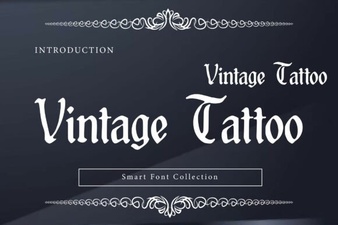 Creative Uses for Vintage Tattoo Fonts
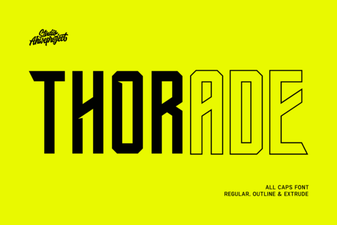 Thorade Font: Modern Design & Creative Projects
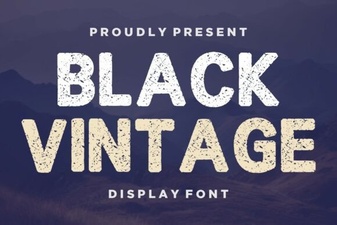 Retro Black Fonts for Classic Design Projects
 Design Your Project with Quasar Soft Font
 Bold & Stylish Chunky Fonts for Creative Projects
 The Andores Font: Design Ideas & Creative Uses